Russian
2026 Trend Insights: Four Core Dimensions for Winning the Future When Choosing Aerial Work Platforms in Russia
In the Russian market in 2026, choosing an aerial work platform is no longer just about buying a piece of equipment, but about selecting a reliable, intelligent, and compliant long-term partner for major infrastructure projects over the next five to ten years in extreme environments.
With 2026 approaching, the Russian construction machinery market is at a historic juncture. An annual demand of up to 15,000 units and a shortage of over 40% of the equipment present unprecedented opportunities for Chinese manufacturers. However, the market is also rapidly evolving: Russia's "import substitution" policy has driven the domestic market share to 15%, and buyers' pursuit of technology has shifted from "usability" to "ultimate fit." Against this backdrop, selecting aerial work platforms for Russian projects, especially vehicle-mounted platforms that combine mobility and high efficiency, must focus on the following four future trends.
Trend 1: From "cold resistance" to "cold mastery," extreme cold performance becomes a key competitive advantage.
Russia's vast territory means that harsh winters are the norm, and future mega-projects are constantly pushing towards the Arctic Circle. Traditional "cold-resistant" designs are no longer sufficient; equipment needs to possess intelligent capabilities to proactively "manage" the extreme cold.
1. Significantly Improved Performance Benchmarks : Future equipment must be able to not only start up in extremely cold environments ranging from -40°C to -50°C , but also maintain stable operation around the clock. This requires redundant design across the entire chain, from the low-temperature toughness of steel and the low-temperature fluidity of hydraulic oil to the protection level of electrical components.
2. Intelligent thermal management becomes standard : Leading equipment will integrate a predictive thermal management system that can automatically preheat or keep the engine, hydraulic tank and battery warm according to the ambient temperature and work plan, minimizing efficiency loss and failure risk caused by extreme cold.
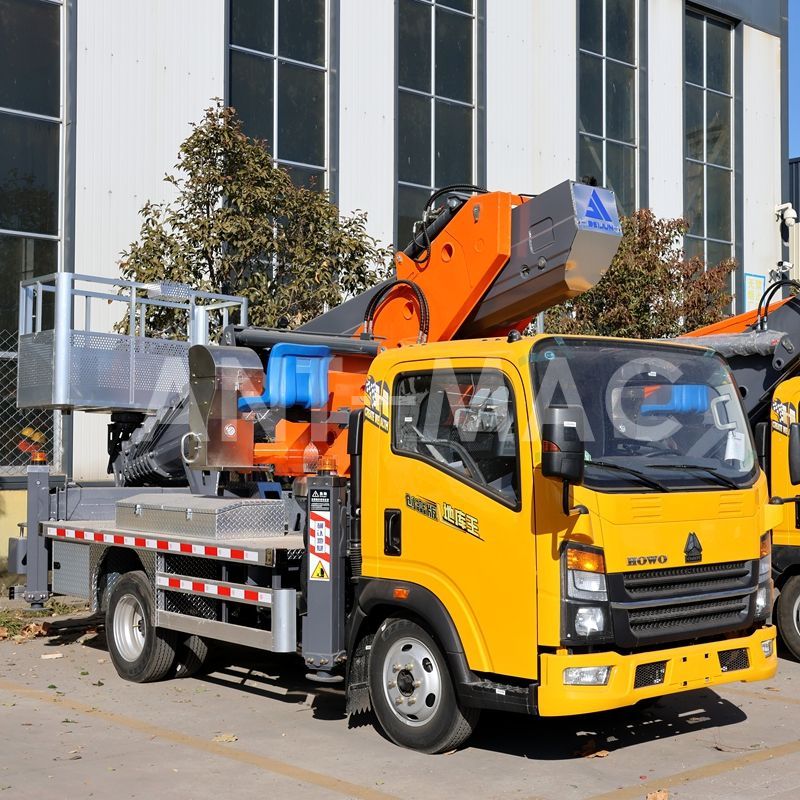
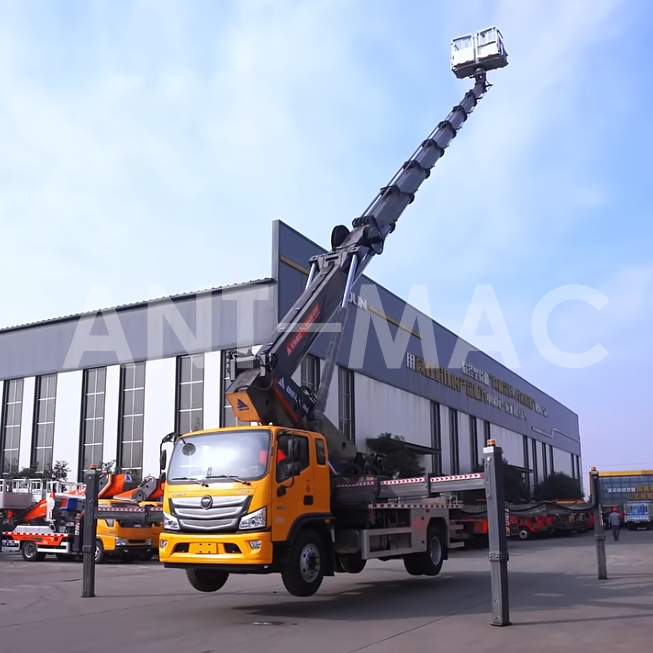
Antmac 's solution : Our vehicle-mounted aerial work platforms are specifically developed for Russia and similar polar climates, and undergo rigorous "cold cabin" testing before leaving the factory. Equipped with intelligent extreme cold survival kits , including engine oil pan heating, hydraulic line electric heating, and a closed, temperature-controlled electrical cabin, they ensure an uptime of over 98% in projects such as the Yakutia gas field within the Arctic Circle.
Trend Two: From "Standalone Operation" to "Digital Nodes," Intelligentization Defines New Boundaries for Efficiency
In 2026, the concept of "smart construction sites" will be rapidly implemented on Russian construction sites. Aerial work equipment will no longer be isolated, but rather an intelligent node in an interconnected data network.
1. Remote Control and Cluster Operation : Through a 5G remote control system , operators can simultaneously control multiple devices from a warm work shed, which greatly ensures personnel safety and project progress in inclement weather. Furthermore, intelligent anti-collision and collaborative scheduling systems between devices will be key to improving efficiency in large-scale projects.
2. Data-driven predictive maintenance : Equipment transmits operational data back to the cloud platform in real time. Through AI algorithm analysis, potential faults can be predicted in advance, turning "passive maintenance" into "proactive maintenance." This is of great value to energy and mining projects located in remote areas where maintenance is inconvenient.
Antmac 's solution : We offer an optional smart IoT solution . Through in-vehicle smart terminals, customers can not only achieve remote status monitoring, electronic fencing, and work data statistics, but also connect to future construction site management systems to achieve comprehensive digitalization of equipment positioning, work scheduling, and health management, providing core support for customers' "future construction site" blueprint.
Trend 3: From "universal applicability" to "deeply rooted application in specific scenarios," customized demands are surging in the energy and infrastructure sectors.
The demand in the Russian market is rapidly shifting from general-purpose equipment to specialized solutions for specific high-growth sectors.
1. New energy projects drive demand for green initiatives : Guided by the "carbon neutral infrastructure" subsidy program, the demand for electrified and low-emission equipment has surged in new energy projects such as Arctic LNG and wind power. Pure electric or hybrid aerial work platforms capable of adapting to extremely cold environments will receive significant policy and market favor.
2. Infrastructure boom spurs the development of specialized equipment : Strategic projects such as the expansion of the Trans-Siberian Railway and the development of northern seaport clusters place almost stringent demands on equipment's off-road capability, wind resistance, and adaptability to multi-functional attachments. Vehicle-mounted platforms, due to their excellent chassis mobility and rapid relocation capabilities, have become the preferred choice for such dispersed linear projects.
Antmac 's Response : We have a deep understanding of the Russian market and have developed various specialized configurations for scenarios such as oil and gas extraction, mine maintenance, power grid construction, and installation in large transportation hubs . For example, we provide mining clients with reinforced dust filtration systems and crash barriers; and for power grid maintenance, we offer insulated work platforms and precise positioning systems, ensuring that our equipment is not just a tool, but a key to solving specific industry pain points.
Trend Four: From "Trade Exports" to "Localization and Symbiosis"—The Winning Formula for Long-Term Thinkers
Faced with Russia's national policy of strengthening domestic manufacturing capabilities, simple product trade models will reach their limits. By 2026, companies that can participate in the localized ecosystem in a flexible manner will build a deeper competitive advantage.
1. Responding to the "import substitution" policy : This means that equipment needs a higher localization rate, or that manufacturers are willing to cooperate with local partners in a win-win manner through technical cooperation, complete kitting (CKD), etc. At the same time, establishing a reliable after-sales service system and spare parts center locally is a prerequisite for obtaining long-term orders from large state-owned enterprises and energy groups.
2. Seize the opportunities in the Far East Special Economic Zones : Russia offers highly attractive tax incentives for the development of the Far East, including a five-year tax exemption followed by a five-year 50% tax reduction. Establishing service outlets or cooperative assembly plants in this region can not only reduce costs but also quickly respond to the needs of the Far East's huge infrastructure market.
Antmac 's Commitment : We consider compliance and win-win cooperation our lifeline. We are actively exploring partnerships with local Russian partners to establish regional technical service centers and spare parts warehouses, ensuring our customers receive rapid service responses comparable to those of local brands. We offer not only high-quality products compliant with EU CE certification, but also a full-lifecycle partnership agreement covering financing, insurance, training, and technical support .
The Russian market in 2026 presents both opportunities and challenges. Choosing an aerial work platform is essentially choosing the ability to cope with a complex future and participate in national reconstruction. Antmac vehicle-mounted aerial work platforms, with their extreme environmental adaptability, forward-looking intelligent core, deeply scenario-based solutions, and long-term localized service strategy , are committed to becoming your most trusted partner in the vast Russian landscape.
Let's join hands to not only win orders in 2026, but also win the market for the next decade.
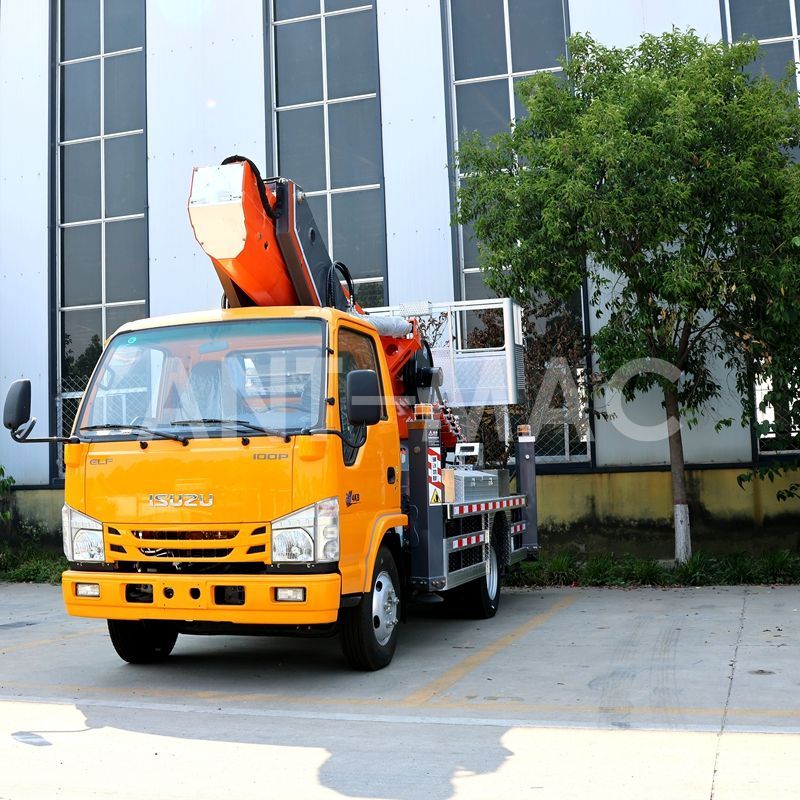 Ant Aerial Work Platforms Push
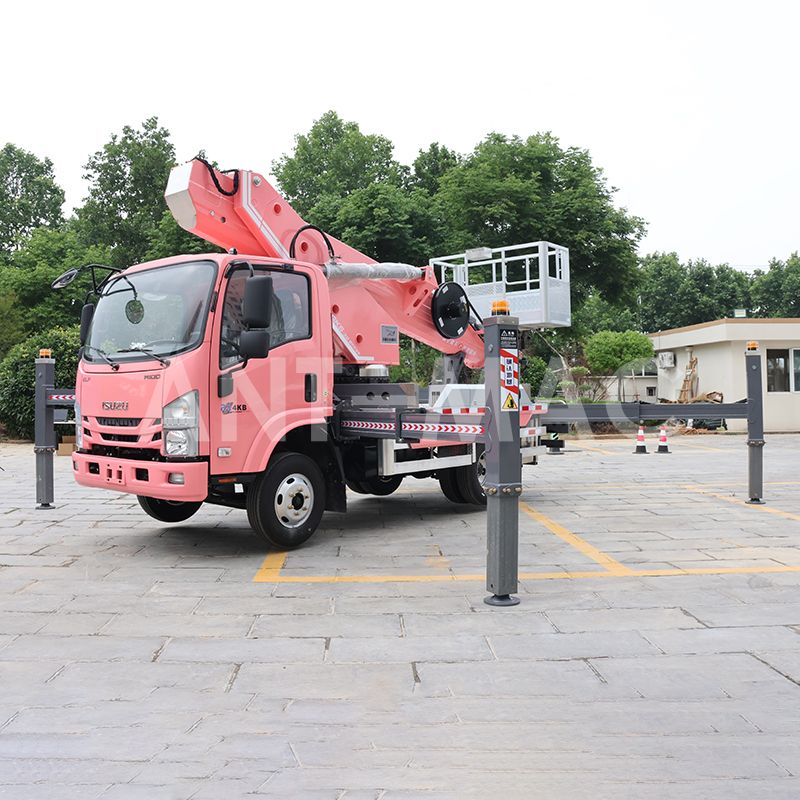 Antmac 40m Truck Mounted Aeria
 Ant-Mac Aerial Work Platforms
 Global Aerial Work Platform Ma